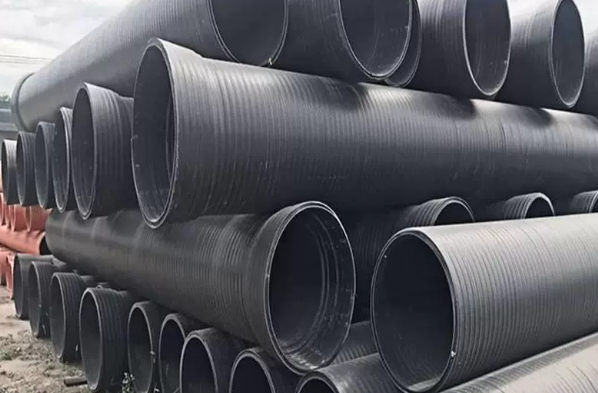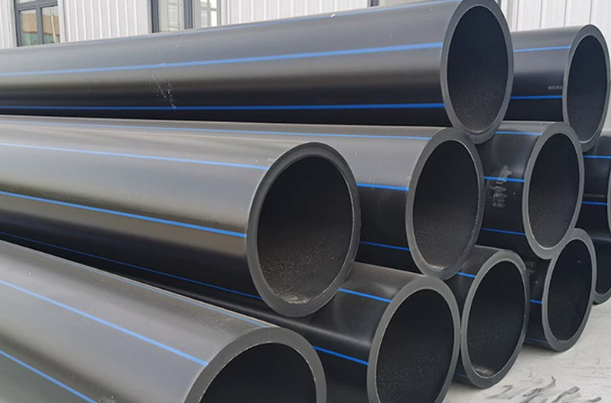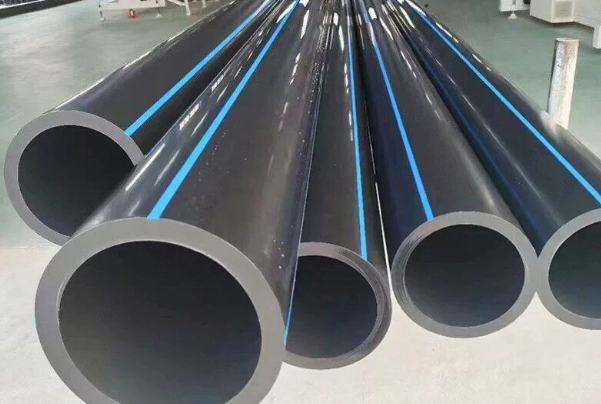
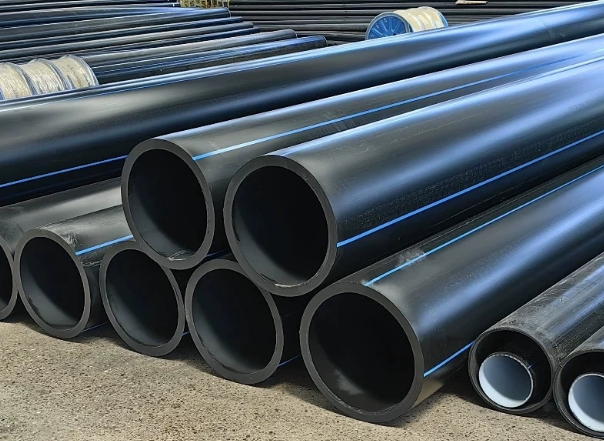
PE water supply pipes are made of polyethylene and widely used in municipal water supply, residential water systems and outdoor network renovation, offering excellent overall performance.
They stand out for corrosion resistance: resistant to acids, alkalis and soil corrosion, they do not rust like metal pipes and produce no rusty water during long-term buried use, safeguarding water quality. No anti-corrosion coating is needed, greatly reducing maintenance costs. The smooth inner wall offers low friction and strong conveying capacity, resists scaling and shows little flow decay over time.
PE pipes are tough and highly impact-resistant, not prone to brittle fracture at low temperatures, and able to accommodate slight foundation settlement and displacement, with better seismic performance than steel or cast iron pipes. They are lightweight and easy to transport and install, mainly using butt fusion and electrofusion joints with reliable sealing to reduce network leakage losses.
They are also non-toxic and odorless, meeting drinking water hygiene standards, and the raw material is recyclable. However, PE pipes have limitations: poor high-temperature resistance (long-term use should not exceed 40°C), lower rigidity than metal pipes (proper pipe bedding is required for buried installation to prevent deformation), and weak UV resistance (long-term outdoor exposure accelerates aging, so burial protection is generally required).
Overall, thanks to reliable water supply performance and economy, PE water supply pipes are among the preferred materials for municipal and building outdoor water supply projects.